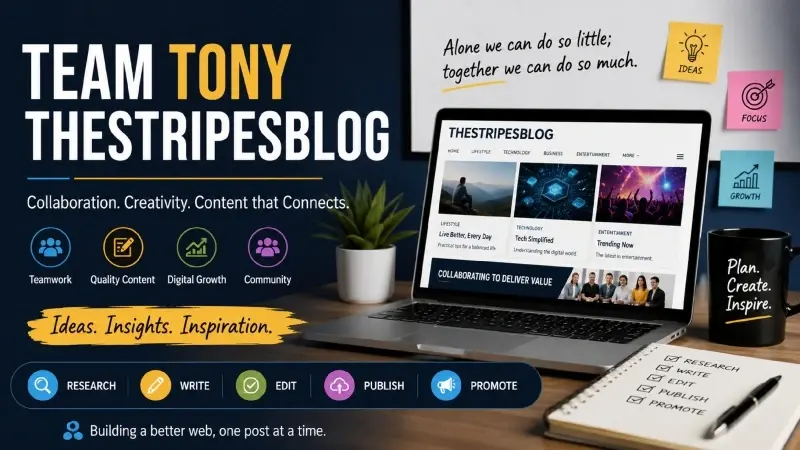
Team Tony Thestripesblog is a distinctive digital keyword that combines personal identity, teamwork, blogging, and online content. Its unusual name naturally creates curiosity among readers who want to understand what it means, what kind of platform it represents, and why people may be searching for it online.
Today, blogs are much more than personal journals. Modern digital platforms can combine articles, community discussions, practical information, creative ideas, and different forms of online content. A collaborative approach can make such a platform more valuable by bringing together different skills, perspectives, and ideas.
Because Team Tony Thestripesblog is a lesser-known digital identity, it is important to distinguish confirmed information from interpretation. This guide therefore focuses on the meaning of the name, the possible role of teamwork, content strategy, audience engagement, SEO, branding, and the principles that can support long-term digital growth.
What Is Team Tony Thestripesblog?
Team Tony Thestripesblog can be understood as a digital identity built around a personal name, a blog-style brand, and the idea of collaboration.
The word “Team” suggests cooperation and shared responsibility. In a modern content operation, different contributors may handle research, writing, editing, design, SEO, promotion, or community engagement.
The name “Tony” gives the identity a personal element. Personal names can make online brands feel more recognizable and approachable.
The “Thestripesblog” portion gives the name a publishing-oriented identity because it contains the word “blog.”
Together, these elements create a distinctive phrase that combines:
- Personal identity
- Teamwork
- Digital publishing
- Community participation
However, the exact ownership, number of contributors, or official structure of the platform should not be assumed without reliable first-party information.
Understanding the Meaning Behind the Name
A digital brand name can create an impression before a visitor reads any content.
The Team element suggests collaboration and shared goals. A team-based approach can make it easier to divide responsibilities across research, writing, editing, visual design, marketing, and audience communication.
The Tony element gives the name a human quality. Personal branding can help readers remember a digital project more easily.
The Thestripesblog element gives the overall identity a connection to blogging and online publishing.
This combination makes the keyword distinctive because it brings together three recognizable ideas:
- Personal identity
- Collaborative effort
- Digital content
The exact official meaning, however, should be confirmed through an official source if one is available.
Why Unique Blog Names Attract Search Interest
People search for more than major companies and famous websites. An unfamiliar name can also attract attention when people encounter it through search results, social media, online discussions, links, or recommendations.
A unique keyword may generate interest for several reasons.
A Memorable Name
Unusual combinations can be easier to recognize than generic website names.
Curiosity About the Background
When readers encounter an unfamiliar digital identity, they naturally want to know what it represents.
Interest in Content
Searchers may want to discover what topics or categories are associated with the platform.
Online Recommendations
Names mentioned repeatedly in communities, articles, or social platforms can naturally receive additional searches.
Personal Branding
A personal element can make an online project feel more recognizable and approachable.
These factors can help explain why a relatively unfamiliar keyword may attract search attention.
The Importance of Teamwork in Blogging
Running a successful blog involves much more than writing articles. Research, planning, editing, design, SEO, publishing, promotion, and audience communication all contribute to the final result.
One person can manage several responsibilities, but a collaborative structure can distribute the workload and improve the overall publishing process.
Research Creates Better Content
Research is the foundation of useful content.
Before creating an article, a content team can examine search intent, common questions, relevant terminology, competing pages, and reliable sources.
Good research helps writers avoid vague statements and provides opportunities to include useful examples and accurate explanations.
Writers Turn Ideas Into Useful Content
Writers transform research into information that readers can understand.
Effective writing does more than provide facts. It organizes information into a logical journey, beginning with the reader’s question and then providing context, explanations, examples, and practical takeaways.
Editors Improve Quality
Editing can significantly improve an article.
An editor can remove unnecessary repetition, correct grammar, improve transitions, check important claims, and make paragraphs easier to read.
This becomes especially useful when several contributors work on the same website.
Designers Improve Visual Communication
Visual elements can make long articles easier to explore.
Featured images, illustrations, diagrams, screenshots, and social media graphics can support written information and create a more consistent brand identity.
Promotion Helps Content Reach Readers
Publishing an article does not automatically guarantee visibility.
Content can be promoted through social media, newsletters, community participation, internal linking, search optimization, and other legitimate marketing methods.
The main objective should be to reach readers who genuinely benefit from the information.
What Kind of Content Can a Platform Like This Offer?
A collaborative platform can cover multiple subjects depending on its editorial direction. However, variety works best when the website maintains a clear structure.
Possible content categories include the following.
Lifestyle and Everyday Ideas
Lifestyle content can cover routines, organization, hobbies, personal development, relationships, and practical everyday experiences.
Useful lifestyle articles should focus on realistic ideas rather than exaggerated promises.
Technology and Digital Trends
Technology content can explain websites, applications, digital tools, productivity systems, online platforms, and emerging trends.
Simple explanations are especially valuable for readers who want useful information without unnecessary technical language.
Entertainment and Popular Culture
Entertainment content can attract attention because readers regularly search for popular topics and public figures.
Accuracy is particularly important in this category. Writers should distinguish verified information from speculation and avoid presenting rumors as facts.
Business and Online Growth
Business-related articles can explore branding, marketing, entrepreneurship, leadership, blogging, productivity, and digital growth.
This type of content can provide practical ideas for people interested in developing online projects.
Community-Based Stories
Community content adds a human element to a digital platform.
Stories about experiences, achievements, challenges, collaborations, and lessons can encourage readers to participate rather than simply consume information.
What Makes Content Valuable to Readers?
Publishing frequently does not automatically create a successful website. Readers return when content consistently provides useful information.
Several characteristics can make an article more valuable.
Clear Answers
Readers should understand the purpose of an article quickly. Long introductions that delay the main answer can reduce engagement.
Practical Information
Examples, explanations, and actionable advice can make content more useful and memorable.
Easy Reading
Short paragraphs, descriptive headings, bullet points, tables, and simple language make long content easier to scan.
Original Perspective
Original analysis and useful insights give readers a reason to choose one article instead of another similar page.
Trustworthy Information
Accuracy is essential for long-term credibility. Important claims should be supported by dependable sources whenever possible.
Building Trust Through Responsible Publishing
Trust is one of the most valuable assets a digital platform can develop.
A website may attract visitors through search engines, but credibility plays an important role in whether those visitors return.
A responsible publishing process should include several practices.
Verify important claims. Information about people, organizations, statistics, and events should be checked against dependable sources.
Separate facts from opinions. Readers should be able to understand when a statement is confirmed information and when it represents analysis or interpretation.
Avoid exaggerated promises. Headlines and introductions should accurately reflect the content.
Update outdated information. Older articles should be reviewed when important details change.
Correct mistakes. Transparent corrections can strengthen credibility and demonstrate responsibility.
These practices are particularly important when writing about a lesser-known digital identity.
Why Original Content Matters
The internet contains an enormous amount of content. Simply rewriting information that already exists may not give a website a meaningful advantage.
Original content should provide additional value through:
- Fresh analysis
- Practical examples
- Personal experiences
- Better organization
- Unique comparisons
- Detailed explanations
- Original visuals
- Previously overlooked information
The objective should not be to make an article unnecessarily long.
Every section should answer a question, explain an idea, or provide useful context.
SEO Strategy for Team Tony Thestripesblog
Search engine optimization can help a website reach people who are actively looking for its content.
However, effective SEO is about much more than repeating a keyword.
Match Search Intent
Before writing, identify what the searcher wants to know.
For a keyword such as Team Tony Thestripesblog, the likely questions may include:
- What is Team Tony Thestripesblog?
- What does the name mean?
- What kind of content is associated with it?
- Why are people searching for it?
- What is its online presence?
A useful article should address these questions naturally.
Use a Logical Heading Structure
Use H2 headings for major sections and H3 headings for supporting topics.
A logical hierarchy makes an article easier for readers to scan and helps search engines understand the page structure.
Use Keywords Naturally
The primary keyword can appear in important areas such as:
- Page title
- Introduction
- Relevant headings
- Main body
- FAQ section
- Conclusion
Avoid forcing the keyword into every paragraph. Natural language is better for both readers and content quality.
Build Strong Internal Links
Internal links connect related pages on the same website.
For example, an article about blogging could link to guides about content strategy, SEO, digital marketing, or audience growth.
A strong internal linking structure helps readers discover related information and gives the website a clearer topical organization.
Optimize Images
Images should support the article rather than exist only as decoration.
Useful image practices include:
- Descriptive file names
- Relevant alt text
- Compressed file sizes
- Appropriate image dimensions
- Modern image formats
- Consistent visual branding
Improve the Mobile Experience
Many people browse websites using smartphones.
A mobile-friendly website should provide readable text, simple navigation, properly sized images, and a responsive layout.
Why User Experience Matters
SEO can bring visitors to a website, but poor user experience can cause them to leave quickly.
A strong content platform should make it easy for visitors to:
- Find related articles
- Search for topics
- Read comfortably
- Understand headings
- Navigate categories
- Access important information
- Move between related pages
Clean design, fast loading, readable typography, and simple navigation can contribute to a better overall experience.
Building a Loyal Online Community
A blog becomes stronger when readers feel involved.
Community building can begin with simple actions such as asking relevant questions, responding thoughtfully to comments, and encouraging readers to share useful experiences.
Newsletters can provide another direct communication channel, while social media can extend conversations beyond the website.
The goal should not simply be to increase follower numbers. A meaningful community consists of people who genuinely interact with and benefit from the content.
Social Media and Content Distribution
A useful article can reach a wider audience when it is distributed through appropriate channels.
One original article can potentially be adapted into several formats:
- A short social media post
- An infographic
- A video explanation
- A newsletter section
- A discussion topic
- A visual quote or tip
This approach allows a strong idea to reach different audiences without relying on low-quality content duplication.
Consistency is important, but quality should remain the priority.
Challenges of Running a Collaborative Blog
Team-based publishing provides many advantages, but it also creates challenges.
Maintaining a Consistent Brand Voice
Different writers naturally have different styles.
Without editorial guidelines, articles can feel inconsistent.
A simple style guide can establish standards for tone, formatting, terminology, headings, spelling, and overall presentation.
Managing Deadlines
Content production usually involves multiple stages.
Research may need to be completed before writing, editing may need to happen before publication, and design may depend on the final article.
A clear workflow can reduce delays.
Avoiding Duplicate Topics
Multiple contributors may accidentally create articles covering the same subject.
A shared content calendar can help identify overlaps and organize future topics.
Balancing Quantity and Quality
Publishing more articles does not automatically mean better growth.
A smaller collection of genuinely helpful articles may provide more long-term value than a large number of thin or repetitive pages.
A Practical Content Workflow
A structured workflow can make content creation more efficient.
Step 1: Identify a Useful Topic
Start with a genuine reader question or information need.
Step 2: Research the Subject
Review dependable sources and identify important questions that existing content may not answer clearly.
Step 3: Create an Outline
Build the article structure before writing the full draft.
Step 4: Write for the Reader
Focus on clarity, usefulness, and natural language.
Step 5: Edit Carefully
Remove repetition, improve transitions, and check important claims.
Step 6: Optimize for Search
Use relevant keywords naturally, add internal links, improve metadata, and make sure the article fully addresses search intent.
Step 7: Prepare Visuals
Create a relevant featured image and supporting graphics when they add genuine value.
Step 8: Publish and Promote
Share the article through appropriate channels where the target audience is active.
Step 9: Review Performance
Monitor useful performance signals and use the findings to improve future content.
This workflow turns blogging into a repeatable process instead of a random publishing activity.
How Team Tony Thestripesblog Could Grow Its Digital Presence
Long-term growth requires more than publishing articles.
A platform can strengthen its identity by developing a consistent editorial direction and understanding which subjects genuinely interest its readers.
One effective approach is to build related content around important topics. A broad guide can act as a central resource, while several focused articles provide additional information on specific questions.
Older content can also be reviewed and updated when necessary.
Consistent visual branding can further improve recognition. Similar typography, layouts, featured images, and design elements can help readers identify the platform more easily.
Most importantly, growth should not come at the expense of credibility.
The Role of Authenticity in Modern Blogging
Readers are increasingly exposed to generic online content.
Articles written only to target keywords may provide little reason for visitors to return.
Authenticity offers a stronger alternative.
A natural writing voice, transparent explanations, practical examples, and responsible sourcing can make content feel more trustworthy.
A platform does not need to sound perfect. It needs to sound useful, informed, and genuine.
That human quality can help distinguish a memorable digital brand from a website filled with generic information.
What Can Make the Brand More Memorable?
A recognizable digital identity usually develops through consistency.
Important elements can include:
- A memorable name
- Consistent visual design
- A recognizable writing style
- Clear content categories
- Reliable publishing
- Useful original content
- Active audience engagement
When these elements work together, readers can begin associating the brand with a particular type of experience.
This recognition can encourage repeat visits and organic recommendations.
Future Opportunities for a Collaborative Content Platform
Digital publishing continues to evolve, creating opportunities for platforms that have a strong foundation.
A content brand could eventually explore formats such as:
- Video explainers
- Interviews
- Podcasts
- Newsletters
- Infographics
- Community discussions
- Original photography
- Downloadable resources
However, expansion should be strategic.
Adding too many formats without sufficient resources can reduce content quality. A better approach is to test new formats, evaluate audience response, and expand the approaches that genuinely provide value.
Frequently Asked Questions
What does Team Tony Thestripesblog mean?
The phrase combines a team-oriented identity, the personal name Tony, and a blog-style digital brand. The exact official meaning should be confirmed through reliable first-party information if available.
Is Team Tony Thestripesblog definitely managed by multiple people?
The word “Team” suggests collaboration, but the exact number of contributors or management structure should not be assumed without verified information.
What type of content can be associated with a blog like this?
A collaborative blog can cover topics such as lifestyle, technology, entertainment, business, digital trends, community stories, and other subjects that fit its editorial direction.
Why might people search for Team Tony Thestripesblog?
The unusual name may create curiosity. Searchers may want to understand its meaning, identity, content, background, or online presence.
Can teamwork improve blogging quality?
Yes. Different contributors can specialize in research, writing, editing, design, SEO, promotion, and audience engagement. Good coordination can improve efficiency and consistency.
Does publishing more articles guarantee better SEO?
No. Search visibility depends on many factors, including relevance, content quality, helpfulness, technical performance, authority, and user experience.
Why is original content important?
Original content gives readers a reason to choose one website over similar pages. Unique analysis, useful examples, and clear explanations can make an article more valuable.
How can a blog build reader trust?
A blog can build trust by publishing accurate information, distinguishing facts from opinions, avoiding unsupported claims, updating outdated content, and correcting errors when necessary.
What is one of the biggest challenges for a content team?
Maintaining consistent quality can be difficult when multiple people contribute. Clear editorial standards, defined responsibilities, and a content calendar can make the process easier.
Key Takeaways
The interest surrounding Team Tony Thestripesblog highlights several important principles of modern digital publishing.
A memorable name can attract curiosity, but long-term success requires much more than branding. Useful content, original ideas, consistent publishing, clear organization, responsible sourcing, and genuine audience engagement all contribute to a stronger online presence.
A collaborative team can divide responsibilities and bring different skills to the publishing process. At the same time, maintaining a consistent voice and quality standard is essential.
For readers, the most important consideration is credibility. Unverified details should not be treated as established facts, particularly when information about a lesser-known digital identity is limited.
Conclusion
Team Tony Thestripesblog is a distinctive digital keyword that combines personal identity, teamwork, blogging, and online publishing. Its unusual structure naturally encourages readers to explore what the name represents and what kind of content may be associated with it.
A successful content platform needs more than an interesting name. It requires useful information, original ideas, consistent publishing, strong organization, clear branding, and meaningful communication with its audience.
Teamwork can support these goals by allowing different contributors to focus on research, writing, editing, design, SEO, promotion, and community engagement. However, responsible publishing remains essential. Assumptions should not be presented as facts, and important claims should be verified whenever reliable sources are available.
Ultimately, sustainable digital growth comes from providing genuine value. When a platform combines authentic communication, helpful content, responsible publishing, and a consistent reader experience, it has a stronger opportunity to build recognition, trust, and a loyal audience over time.