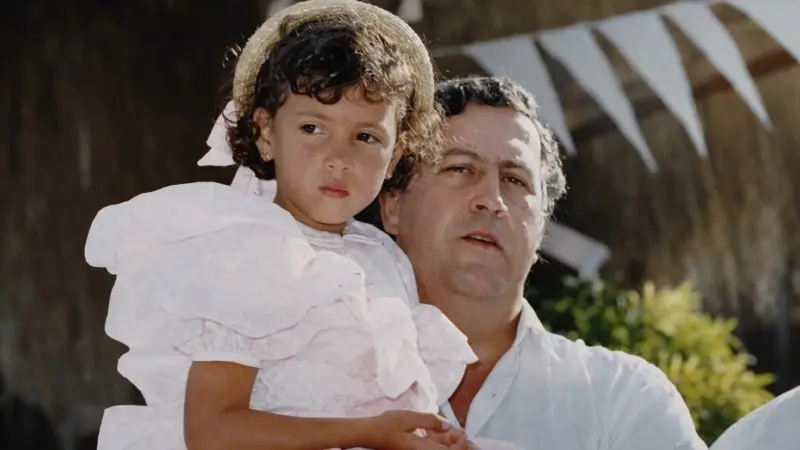
We grow up thinking that our lives are ours to shape. That our identity is not limited by the family we come from, and that we have the freedom to choose our own path. But what happens when your last name carries a heavy legacy—like Escobar? That question crossed my mind one night as I found myself looking through images of Pablo Escobar, one of Colombia’s most infamous figures. While browsing, I came across a photo of his daughter, Manuela Escobar. The image was simple. Her expression was calm. Yet behind it, I sensed a story I had never truly considered.
We often direct our attention toward crime, violence, and the individuals responsible for it. The headlines focus on chaos and destruction. But very rarely do we pause to think about the lives of the children left in the shadows. Who are they, really? And how do they move forward when they are constantly linked to a past they never chose?
This is not a narrative centered on Pablo Escobar. Instead, it is a thoughtful reflection — a human perspective — on the life of Manuela Escobar.
Quick Overview of Manuela Escobar
| Category | Information |
|---|---|
| Full Name | Manuela Escobar |
| Age | Around 40 years old (as of 2025) |
| Birth Date | May 25, 1984 |
| Birthplace | Medellín, Colombia |
| Father | Pablo Escobar |
| Mother | Maria Victoria Henao |
| Career | Entrepreneur; previously studied Public Relations |
| Estimated Wealth | Approximately $1 million (based on unverified reports) |
| Business Activity | Believed to be involved in a handmade pet products venture (not officially confirmed) |
The Shadow She Never Asked For
Picture this: a young girl growing up in a grand estate, surrounded by unusual animals, with a father who fulfills her every wish. She doesn’t fully grasp the tension beyond the walls — the guarded entrances, the helicopters passing overhead, or the hushed conversations among adults. To her, there’s only one truth: her father is everything. He loves her deeply. In her eyes, she is his little princess.
This was the early reality of Manuela Escobar—a childhood shaped by both comfort and constant risk.
Sometimes, I wonder what it feels like to receive a kind of love that is deeply sincere in intention but surrounded by danger. Pablo Escobar carried a violent legacy, yet he showed a strong emotional attachment to his daughter. People often repeat stories online that he burned large amounts of cash to keep his daughter warm when she was ill. Many describe this moment as extreme but also strangely devoted.
But what lingers isn’t the wealth or the dramatic details. It’s a deeper question: how does a child make sense of such love when the world despises the man who gave it?
A Life in Hiding
When Pablo Escobar was killed by Colombian authorities in 1993, everything changed overnight for his daughter, Manuela Escobar. She was just nine years old — an age when most children are still discovering simple joys like riding a bike or learning everyday skills. Instead of a normal childhood, her life suddenly became a journey of escape.
Her family moved from place to place, desperately seeking refuge and a chance to start again. After facing rejection in several countries, they were eventually allowed to settle in Argentina, where they adopted new identities and tried to rebuild their lives.
From that point on, Manuela disappeared from public view. There were no school memories shared online, no social presence, and no ordinary childhood experiences to look back on. Her life became defined by caution, silence, and the constant need to stay hidden.
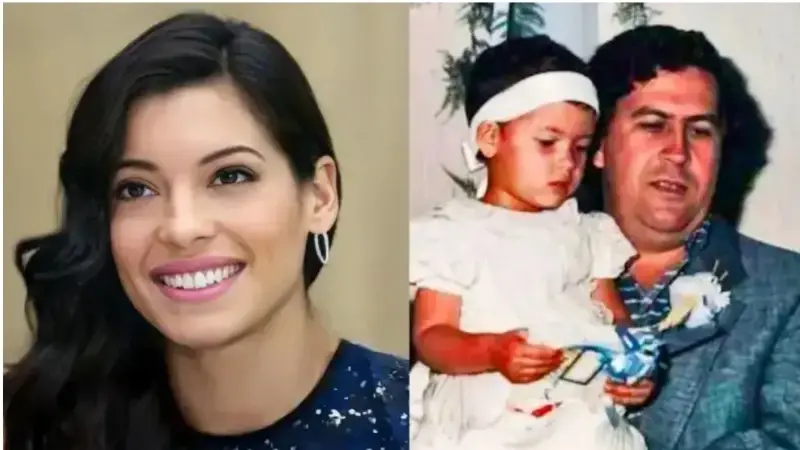
This part of her story feels especially powerful. Children often carry emotional burdens they don’t fully understand or know how to express. It’s easy to overlook how deeply they feel shame, even when they have done nothing wrong. And perhaps no one carried that quiet weight more than Manuela Escobar.
The Weight of a Last Name
I’ve always felt that everyone should have the opportunity to begin again. But the real question is, does society truly allow that?
For Manuela Escobar, the answer appears to be a quiet yet painful no. Her brother, Sebastián Marroquín (originally named Juan Pablo Escobar), chose a different path. He stepped into the public eye, becoming an author and speaker, openly discussing his father’s past while promoting messages of peace and reflection.
Manuela, however, moved in the opposite direction—choosing a life of near-total privacy.
She stayed out of the spotlight completely. No public interviews. No personal books. appearances in documentaries, including popular platforms like Netflix. Her story remained untold, hidden behind silence.
Perhaps that was entirely her own decision. Or perhaps it was shaped by the unspoken pressure of a world that would only listen if she revisited the painful legacy tied to her name.
And it raises a question that lingers: how long should children be held accountable for the actions of their parents?
The Woman We Know Nothing About
Even today, very little is known about the adult life of Manuela Escobar. Perhaps that silence is intentional — a boundary she has chosen to protect her privacy.
We live in a world that constantly demands visibility, where people are expected to share every detail of their lives. Yet sometimes, true strength lies in stepping back, in choosing invisibility, and in quietly declaring, “My story is mine alone.”
In that sense, her silence also works as a form of resistance — a way to take back control of a life that circumstances shaped beyond her choice. Over the years, people have turned the legacy of Pablo Escobar into entertainment. It appears in television series, internet memes, and even costumes. Against this backdrop, her decision to stay away from the public eye feels even more significant. Perhaps her most powerful decision was to completely withdraw from the public narrative.
Still, it’s hard not to wonder about the person she might have wanted to become. What dreams did she once carry before the world defined her identity for her? A teacher, a writer, a mother—or perhaps simply an ordinary life, which may have been the most extraordinary wish of all.
What We Can Learn from Manuela Escobar
When I think about Manuela Escobar today, I don’t see a “cartel princess” or simply the daughter of a notorious figure. Instead, I see a human being who reminds us that behind every infamous story, there are innocent lives quietly affected in the background.
Her life reflects the meaning of survival—showing that sometimes the deepest pain is not only about loss but about living with a legacy that the world refuses to forget or rewrite.
She also represents the value of privacy. In an age where personal struggles are often turned into public entertainment, her silence shows how powerful it can be to protect your own story by not sharing it with the world.
Most importantly, she reflects the idea of identity. We are not bound entirely by our past, even when society tries to define us by it or when names carry heavy histories like that of Pablo Escobar. We always have the right to exist beyond it.
My Own Reflection
Writing this essay also led me to reflect on my own life. I did not grow up around crime or notoriety, but I did grow up in a household filled with unspoken truths. A father who seemed to live a double life and a childhood surrounded by silence and unanswered questions that I was never allowed to voice. For years, I carried that weight quietly, much like what Manuela Escobar may have experienced in her own way.
What eventually helped me wasn’t a single dramatic turning point. Instead, it was a slow and gentle process of healing. Therapy, meaningful friendships, late-night walks, music, and books all became part of that journey. Most importantly, I began to understand that I had the right to design my own future.
And perhaps, somewhere in Argentina or wherever life has taken her, Manuela is walking a similar path—living quietly, healing at her own pace, and slowly building a new life one small step at a time.
Conclusion
We may never know the complete life story of Manuela Escobar, and perhaps that uncertainty is something we must accept.
What is clear, however, is that she is far more than a surname or a historical label. She is more than the daughter of Pablo Escobar and more than a figure tied to a controversial legacy. She is an individual who deserves the freedom to live her life without carrying the heavy expectations placed on her by the world.
In a society that often either glorifies or condemns the children of powerful figures, Manuela’s life represents something quieter but deeply meaningful — the strength it takes simply to endure and move forward.
So, the next time Pablo Escobar’s name comes up, take a moment to remember his daughter as well. Not because of fame or actions, but because of her silence, her distance from the spotlight, and her choice to seek peace away from a painful legacy. Even in the shadow of a dark history, there is still room for light to exist.
For more insights and stories like this, feel free to visit our website.